

>> Innovation & Entrepreneurship: Key Drivers of Economic Growth: A Working Paper >>
By Walter Rodriguez, Ph.D., P.E.
Summary: The symbiotic link between innovation, entrepreneurship, and economic development has garnered significant attention from policymakers, researchers, and industry leaders. This working article delves (briefly) into the intricate relationship between innovation, entrepreneurship, and economic development, supported by peer-reviewed research and statistical evidence. By examining what works and what doesn't in fostering economic growth, we can better comprehend the dynamics that drive prosperity in societies. Intellectual Property (IP) research and The Theory of Knowledge Spillover Entrepreneurship may provide some cues as to what works, like developing vibrant entrepreneurial ecosystems and supportive entrepreneurial government policies. It’s also helpful to review the challenges and pitfalls (or what doesn’t work.)
Innovation as a Catalyst for Economic Growth
Numerous studies have highlighted the role of innovation as a primary driver of economic development. Research by the World Intellectual Property Organization (WIPO 2018) demonstrates that innovation fuels productivity growth, enhances competitiveness, and creates wealth.
Innovations can range from groundbreaking technological advancements to process improvements that optimize resource utilization, leading to increased efficiency and economic output.
According to WIPO, countries with higher levels of innovation tend to experience higher economic growth rates. Further, The Global Innovation Index (GII) shows that innovation-driven economies consistently outperform factor-driven and efficiency-driven economies in terms of GDP growth. For instance, in the 2020 Global Innovation Index, Switzerland, Sweden, and the United States were ranked as the top three innovative economies, and they also had higher GDP per capita values than less creative economies.
Fortunately, innovation can be easily fostered and learned by applying techniques such as design thinking, among many others (Rodriguez, W. 2023).
Entrepreneurship as an Engine for Job Creation
Entrepreneurship is pivotal in job creation, particularly in establishing new enterprises and startups. A study published in the Journal of Economic Perspectives (Haltiwanger, J., Jarmin, R. S., & Miranda, J. 2010) reveals that young and small firms are disproportionately responsible for net job creation in the economy. This indicates that a vibrant entrepreneurial ecosystem fosters economic growth and reduces unemployment rates.
The Global Entrepreneurship Monitor (GEM) reports that in economies with higher rates of entrepreneurship, there tends to be a positive impact on job creation. According to GEM's 2020/2021 report, high-income economies with higher entrepreneurial activity also have lower unemployment rates. The Kauffman Foundation's research highlights that new firms, often driven by entrepreneurs, play a critical role in net job creation in the United States. Startups and young companies contribute significantly to job growth, even during economic downturns (Kane 2010).
Strategies That Work
Innovation Clusters and Ecosystems: Research from the Brookings Institution (Florida, R., Mellander, C., & Stolarick, K. 2014) highlights the significance of innovation clusters and ecosystems. These localized networks unite researchers, entrepreneurs, and investors, fostering knowledge spillovers, collaboration, and resource access. Notable examples include Silicon Valley in the United States and the Cambridge Cluster in the United Kingdom. Such clusters enhance innovation diffusion and attract global talent, contributing to sustained economic development.
Government Policies to Encourage Entrepreneurship: A comprehensive study by the OECD (2012) underscores the importance of supportive government policies for entrepreneurship. Provisions such as simplified business registration reduced bureaucratic hurdles, and access to financial resources empowers aspiring entrepreneurs to transform innovative ideas into viable businesses. Moreover, policy measures that promote intellectual property protection and R&D tax incentives further incentivize entrepreneurial activities.
The Organisation for Economic Co-operation and Development (OECD) emphasizes the role of government policies in fostering entrepreneurial ecosystems. In a study of 54 economies, OECD found that countries with more favorable regulatory environments for entrepreneurship had higher rates of business startups.
The World Bank's "Doing Business" report assesses the ease of business in different economies. The report consistently shows that economies with streamlined regulations, efficient business registration processes, and supportive legal frameworks tend to have more vibrant entrepreneurial ecosystems.
The above statistics highlight the positive relationship between innovation, entrepreneurship, and economic development. While these figures provide a strong foundation, it's important to note that correlations do not necessarily imply causation. Other factors, such as cultural, social, and political contexts, also contribute to the complex dynamics of economic development.
Challenges and Pitfalls
Lack of Access to Funding: While innovation and entrepreneurship thrive on novel ideas, their realization often hinges on financial resources. A study published in the International Journal of Entrepreneurial Behavior & Research (Baptista, R., Lima, F., & Mendonça, J. (2014) emphasizes that limited access to funding can hinder entrepreneurial ventures, stifling their growth potential and economic impact.
Regulatory Barriers: Overly burdensome regulations and administrative hurdles can impede entrepreneurial activities. A report by the World Bank (2019) highlights that complicated business registration processes and excessive red tape discourage potential entrepreneurs from entering the market, constraining economic development prospects.
Conclusion
By fostering innovation clusters, implementing supportive government policies, and addressing challenges such as funding and regulatory barriers, societies can unleash the full potential of innovation and entrepreneurship to drive sustainable economic development. As we navigate the ever-evolving global landscape, the continued exploration of effective strategies will undoubtedly pave the way for prosperous and resilient economies.
Further research: According to the theory of knowledge spillover entrepreneurship, a context with more knowledge will generate more entrepreneurial opportunities (Audretsch, D. B., & Keilbach, M. (2007). But, What specific government policies can be implemented to encourage entrepreneurship? How can limited access to funding be addressed to support entrepreneurial ventures? How can regulatory barriers be reduced to promote entrepreneurial activities? The upcoming paper will expand on the above topics.
References and Suggested Readings
Audretsch, D. B., & Keilbach, M. (2007). The Theory of Knowledge Spillover Entrepreneurship. Journal of Management Studies, 44(7), 1242-1254. https://onlinelibrary.wiley.com/doi/10.1111/j.1467-6486.2007.00727.x
Baptista, R., Lima, F., & Mendonça, J. (2014). Establishment Dynamics and Job Creation in the Portuguese Economy. International Journal of Entrepreneurial Behavior & Research, 20(5), 420-443. https://www.emerald.com/insight/content/doi/10.1108/IJEBR-01-2013-0002/full/html
Florida, R., Mellander, C., & Stolarick, K. (2014). The Rise of the Mega-Region. Brookings Institution. https://www.brookings.edu/.
Haltiwanger, J., Jarmin, R. S., & Miranda, J. (2010). Who Creates Jobs? Small vs. Large vs. Young. Journal of Economic Perspectives, 23(3), 3-22.
Kane, T. (2010). Kauffman Foundation Research Series: Firm Formation and Economic Growth: The Importance of Startups in Job Creation and Job Destruction. Accessed at https://www.kauffman.org/
OECD. (2012). Entrepreneurship and Innovation in Emerging Economies. OECD Publishing. https://www.oecd.org/cfe/leed/entrepreneurship-and-innovation-in-emerging-economies-9789264113527-en.htm
Rodriguez, W. (2023). How We Innovate: The Startling Truth About How, Why, Where, and When it Happens. Washington: KDP. ISBN: 9798373542623. For Profit and Non-Profit Innovation.
World Bank Group. (2019). Doing Business 2020: Comparing Business Regulation in 190 Economies. World Bank. https://openknowledge.worldbank.org/handle/10986/32436
World Intellectual Property Organization (WIPO). (2018). World Intellectual Property Indicators 2018. WIPO. https://www.wipo.int/edocs/pubdocs/en/wipo_pub_941_2018.pdf.
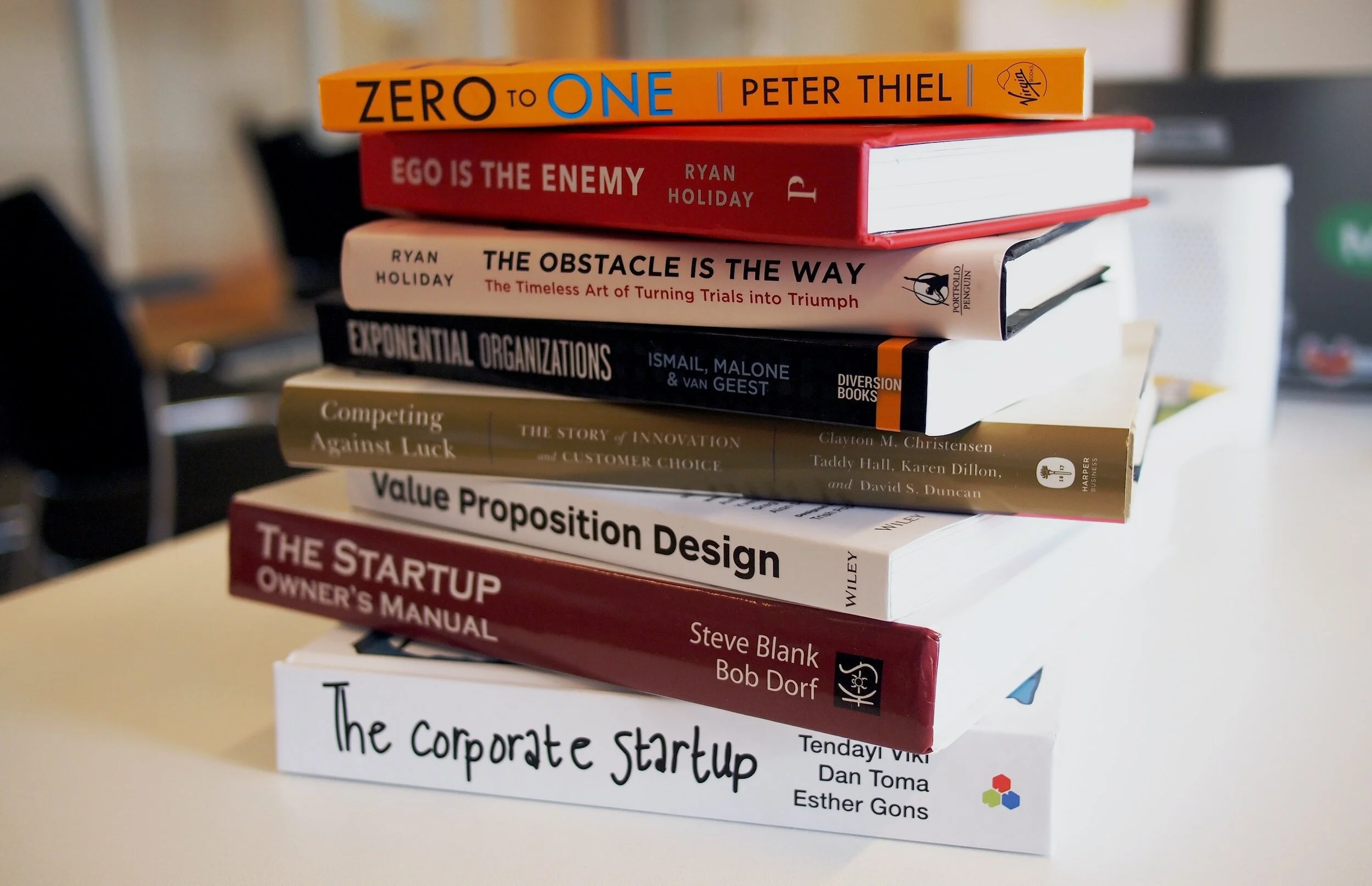
> 12 Lessons to Boost Our Entrepreneurial (or Intrapreneurial) Careers
By Walter Rodriguez, Ph.D., PE
As an entrepreneur and intrapreneur, I would offer the following career advice to new and aspiring entrepreneurs, drawing inspiration from the likes of Jeff Bezos, Elon Musk, and Steve Jobs:
Start with a Passionate Vision: Your venture should be fueled by a strong vision that excites and motivates you. Jeff Bezos started Amazon to revolutionize online shopping, Elon Musk founded Tesla to accelerate the world's transition to sustainable energy, and Steve Jobs aimed to create user-friendly, elegant technology at Apple.
Embrace Risk and Failure: Entrepreneurship involves inherent risks and the possibility of failure. Elon Musk and Steve Jobs faced numerous setbacks, but their determination and ability to learn from failures were crucial to their success. Be prepared to take calculated risks and learn from mistakes.
Innovate and Disrupt: All three entrepreneurs disrupted existing industries by introducing innovative solutions. To stand out, identify gaps in the market and come up with novel approaches. Bezos transformed retail, Musk revolutionized electric vehicles and space travel, and Jobs reimagined personal computing and mobile technology.
Customer-Centric Approach: Jeff Bezos famously said, "Start with the customer and work backward." Prioritize understanding your customers' needs and delivering exceptional value. Apple's success, for instance, is attributed mainly to its customer-focused design and user experience.
Stay Committed and Persistent: Entrepreneurial journeys are often long and challenging. Elon Musk and Steve Jobs encountered setbacks that could have deterred them, but their unwavering commitment and persistence propelled their ventures forward. Stay focused on your goals even during tough times.
Build a Strong Team: Surround yourself with talented, passionate individuals who complement your skills and share your vision. Jeff Bezos, Elon Musk, and Steve Jobs all built teams that were instrumental in realizing their ambitions.
Adaptability and Flexibility: Markets and technologies evolve rapidly. Be willing to adapt your strategies and offerings as needed. Elon Musk's ability to pivot from online payments (PayPal) to electric cars (Tesla) demonstrates the importance of flexibility.
Invest in Research and Development: Innovation requires ongoing investment in research and development. Steve Jobs prioritized design and user experience, creating iconic products like the iPhone. Allocate resources to continuous improvement and innovation.
Think Long-Term: Jeff Bezos is known for his long-term perspective. Building a lasting business often requires sacrificing short-term gains for long-term growth. Focus on building a solid foundation rather than chasing quick wins.
Never Stop Learning: Entrepreneurship is a journey of constant learning and self-improvement. Stay curious and hungry for knowledge and open to new ideas. Elon Musk's diverse ventures demonstrate his willingness to dive into unfamiliar industries.
Stay Humble: While confidence is necessary, humility is equally essential. Recognize that you don't have all the answers, and be open to feedback and constructive criticism. Steve Jobs' ability to collaborate and listen contributed to his success.
Think Big: All three entrepreneurs thought grandly and pursued audacious goals. Be ambitious and set high standards for yourself and your company. Elon Musk's vision of colonizing Mars is a testament to thinking beyond the ordinary.
Remember that every entrepreneur's (or intrapreneur's) journey is unique. Still, these principles can guide you as you navigate the challenges and opportunities of building your own business or optimizing your career path in a company or organization.

>> 15 Practical Tips for New & Emerging Leaders
Walter Rodriguez, PhD
In my long academic & industry career, I have met and followed hundreds of CEOs, VPs, and Presidents. And below, I have distilled essential tips:
1. "Front-end-Loading" Relationships: Ron and Tom (both former CEOs of product development and agriculture companies, respectively) scheduled weekly breakfasts with new department heads and old customers. They fostered a positive and inclusive work environment by building solid relationships early inside and outside the company. Building strong relationships with your team members and colleagues breeds trust, respect, and understanding.
2. Lead by example: Indra (CEO of a global product company) had a deep sense of purpose. She discovered her “why” and passion early in her career. And she demonstrated the values and behavior she expected from her team. By being reliable and accountable and showing a solid work ethic, she earned respect and encouraged her team to follow suit.
3. Communicate effectively: Tom (a former start-up CEO) tells me that clear communication is crucial in leadership. And he also had weekly breakfasts with other leading staff members and customers. But you already knew that. During meetings, be transparent about goals, expectations, and challenges. Listen actively to your team members and address their concerns.
4. Empower your team: Tom also encouraged autonomy and empowered his team to make decisions within their areas of responsibility. This fosters a sense of ownership and motivation. Then, ask about their successes and celebrate (share) them with everyone in their organization.
5. Provide constructive feedback: Louis and Alice (a former Dean and a CEO, respectively) in their respective organizations offered feedback regularly, both positive and productive. Celebrate successes and help team members grow by guiding areas for improvement.
6. Set realistic goals: Mark (CEO of a logistics and later on of a training company) established achievable, measurable, and time-bound goals for your team. For instance, he asked: "Could you break down larger objectives into smaller milestones to track progress effectively?"
7. Continuously learn and develop: Every CEO I meet with agrees that investing in your (and your team's) knowledge and leadership growth is valuable. Seek feedback, attend workshops, read books, and learn from experienced mentors to enhance your leadership skills.
8. Stay adaptable: Since the business landscape is constantly changing, I learned early on to be flexible and adaptable in my approach to problem-solving and decision-making.
9. Handle conflicts constructively: An academic leader told me that disputes may arise often. Address them promptly and professionally, seeking resolutions that benefit everyone involved.
10. Celebrate diversity and inclusion: Embrace diversity and create an inclusive workplace where all team members feel valued, SAFE, and appreciated for their unique perspectives and contributions. Getting a variety of perspectives helps develop better products and services.
11. Delegate wisely: Learn to delegate tasks effectively based on your team member's strengths and interests. Avoid micromanaging, as it can demotivate and hinder growth.
12. Stay positive and resilient: You'll face challenges and setbacks as a new or emergent leader. Maintain a positive attitude and demonstrate resilience in overcoming obstacles.
13. Encourage innovation: James (former and current CEO of accounting firms and consultancies) sees leaders as catalysts, and he demonstrated that innovation could happen even in seemingly boring accounting firms. Foster a culture of creativity and innovation within your team. Encourage new ideas and be open to trying different approaches.
14. Recognize and reward achievements: John, Roger, and Aysegul have an enduring passion for what they do every day. And often acknowledge and reward performance. Once your staff buys into the vision and mission, recognition can be a powerful motivator for your team, sometimes even better than promotions or money.
15. Most notably, take care of yourself, your family, and your community: Leadership can be demanding, so prioritize self-care and maintain a healthy work-life balance. Your well-being directly impacts your ability to lead effectively.

Logistics in War and Peace
By Walter Rodriguez, PhD, PE, L+
Logistics in War & Peace: In this post, I reflect on the critical role of logistics in both war and peace as we celebrate Independence Day on the 4th of July. Effective logistical operations have shaped historical events and facilitated the functioning of societies.
For instance, during the British American War for independence in the late 18th century, logistics proved to be a decisive factor in the success of the American colonies. Lacking the resources and infrastructure of traditional military power, the American revolutionaries relied on logistics to level the playing field. By employing innovative tactics such as guerrilla warfare and supply chain disruption, the colonists disrupted British supply lines, hampered troop movements, and ultimately secured their victory. This strategic use of logistics demonstrated its potential as a force multiplier in achieving military objectives.
Further, the Normandy invasion, also known as D-Day, marked a pivotal turning point in World War II. The success of this massive amphibious assault was heavily reliant on meticulous planning and flawless execution of logistics. Allied forces meticulously coordinated the transportation of troops, equipment, and supplies across the English Channel, ensuring everything was in place for the invasion. Logistics provided the backbone for the attack, from landing craft and amphibious vehicles to fuel, ammunition, and food. Despite the immense logistical challenges, the Allies managed to establish a foothold in Normandy, ultimately leading to the liberation of Europe.
Of course, as the COVID-19 pandemic swept the globe, it highlighted the criticality of logistics in times of crisis. The efficient distribution of personal protective equipment (PPE), medical supplies, and vaccines became paramount to combating the virus. From manufacturing and transportation to inventory management and distribution networks, logistics was pivotal in ensuring the timely delivery of essential resources to healthcare workers, hospitals, and communities. Effective supply chain management became a matter of life and death.
Logistics is essential in humanitarian operations in war and peace to deliver aid and support to affected populations. During natural disasters such as earthquakes, hurricanes, and tsunamis, logistics is critical in coordinating the distribution of food, water, shelter, and medical supplies. Non-governmental organizations (NGOs), international agencies, and military forces work together to establish logistics hubs, transport resources, and manage the flow of aid to ensure efficient delivery to those in need.
#logistics #manufacturing #healthcare #supplychain #continuingeducation #transportation #supplychainmanagement #management #infrastructure #planning #medical #food #hospitals #europe #covid #military #events #power #success #transport #water #work

> Drayage Logistics
Drayage Logistics: Transport Efficiently Over Short Distances
By Walter Rodriguez, PhD, PE, L+
Drayage logistics refers to moving goods over a short distance, usually from a port or railway terminal to a warehouse or distribution center. The term originated from horse-drawn carts, commonly called "drays." Your company can hire a drayage service to transport the shipping containers from the port to the distribution center. The figure shows a sample NTG Freight drayage delivery operation.
Dana’s Drayage Story: As a logistics manager for a retail company, Dana regularly coordinated drayage services to transport shipping containers from the port to distribution centers, allowing them to efficiently move goods over short distances and optimize their supply chain operations.
Dana researched and established relationships with reputable drayage service providers in their port's area to ensure a smooth and reliable drayage process. And they evaluated factors such as their experience, equipment availability, service quality, and rates to select the most suitable partners for our specific requirements.
Coordinating Container Pickup: Dana communicated the details to the selected drayage service provider once the cargo arrived at the port via ocean vessels. This included container numbers, shipping information, and any specific instructions regarding the delivery. The drayage service provider would dispatch drivers to the port to pick up the containers.
Transporting Containers to Distribution Centers: The drayage service provider used specialized trucks and equipment to transport the containers from the port to the designated distribution centers. They would coordinate with the port authorities to ensure timely access and adhere to specific regulations or requirements.
Managing Documentation and Compliance: Dana closely monitored the process as the containers were transported to ensure compliance with all relevant regulations and documentation requirements. This included verifying that the drayage service provider had the necessary permits and licenses and that all customs and port-related paperwork was in order.
Communication and Tracking: Throughout the drayage process, Dana maintained regular contact with the service provider to stay updated on the container's status and estimated arrival time. This enabled practical planning of subsequent steps in their supply chain, such as warehouse operations and distribution scheduling.
Efficient Handoff to Warehouse Operations: Dana worked closely with the warehouse team to ensure a seamless handoff once the containers arrived at our distribution centers. This involved coordinating the unloading of the containers, verifying the contents against shipping documentation, and initiating inventory management processes.
…
Drayage is a crucial component of the overall supply chain and plays a significant role in facilitating the movement of goods between different modes of transportation.
As mentioned earlier, the term "drayage" historically referred to using horse-drawn wagons for transporting goods, but in modern logistics, it typically involves using trucks or other motorized vehicles. Drayage logistics often focuses on containerized cargo, particularly in international trade, where containers must be transported between ports and nearby destinations.
Drayage logistics services may include picking up or delivering containers from ports, rail terminals, or other intermodal facilities, transporting them to nearby warehouses or distribution centers, and managing the associated paperwork and documentation. Drayage providers work closely with shipping lines, freight forwarders, and other stakeholders in the supply chain to ensure efficient and timely movement of goods.
Challenges: In recent years, drayage logistics has faced challenges and opportunities due to increasing trade volumes, congestion at ports and intermodal facilities, environmental concerns, and the need for optimization and visibility within the supply chain. As a result, technology solutions and innovative approaches are being adopted to streamline operations, improve efficiency, and reduce the environmental impact of drayage logistics.
To learn more, check Coursewell.com and https://lnkd.in/en3z4_Hf. Or, check the Logistics+ book (softcover, 670 pp.) at https://a.co/d/5IE95ls.
References
Hensher, D. A., Mulley, C., & Ho, C. (2017). The determinants of drayage trucking demand. Transportation Research Part E: Logistics and Transportation Review, 105, 82-98.
Malchow, M., Hanisch, F., & Bock, S. (2019). Drayage truck scheduling at a seaport container terminal. Transportation Research Procedia, 41, 463-470.
Rodriguez, W. (2023). Logistics+: Mastering Logistics from Analytics & Technologies. Plus, E-Commerce. AI. Transportation, Risk, Procurement. Distribution. Inventory, Warehousing. Lean Supply Chain. Sourcing. Agile Manufacturing. Supply Chain Logistics. Logistics Careers. Washington: KDP. ISBN: 9798394837784.
Taniguchi, E., Yamada, T., & Thompson, R. G. (Eds.). (2017). City logistics: Mapping the future. CRC Press.
#supplychain #quality #retail #compliance #shipping #warehouse #transport #communication #Drayage #Coursewell #Logistics+ #freight #transportation

> New
Thanks for making our Logistics+ book the #1 New Release in the "Business > Distribution & Warehouse Management" category at Amazon's KDP. Please contact me for a free version if your school cannot afford the book.
Below are links to the book's 670-page print and ebook versions, including hundreds of Supply Chain Logistics concepts, principles, definitions, examples, guidelines, sample certification exam questions, answers, and rationale. Walter@coursewell.com
Paperback: https://a.co/d/i0xRJob
eBook Printed Replica: https://a.co/d/gJStn8h
Kindle App Scrollable: https://a.co/d/efZodx6

> One Logistics Survival Skill You Must Develop to Thrive in the AI Age: Adapting to Change>
In a word, Adaptability. But how do we develop this ability to adapt in the AI Era? In addition to the core Logistics knowledge and practice, we must focus on how to work with, around, and even on these seemingly user-friendly AI technologies. Continuous learning, certifications, and questioning are crucial tasks in this endeavor.
Like many others, the logistics industry is being significantly transformed by AI, automation, and sustainability. To stay relevant in this field, we must develop a combination of technical and interpersonal adaptabilities that allow us to understand and leverage AI effectively, for instance:
Creativity, Design & Innovation: AI is often good at optimizing within constraints but still struggles with open-ended problems. Design thinking, brainstorming, and creative thinking will be in high demand.
Cross-Disciplinary Knowledge: AI and machine learning are tools that can be applied in many fields, including Logistics. But mastering a specific domain, like Logistics, and a solid understanding of AI can make one very valuable and marketable.
Information Technology: Understanding Artificial Intelligence (AI) and automation, Internet-of-Things (IoT) devices, robotics, and their capabilities and limitations will be critical. Besides, it's still essential to be comfortable with software applications and systems used in logistics. Technology is the foundation of working in an advanced society. And it goes beyond just knowing how to use software apps. It also involves understanding how software and algorithms work. This may include basic coding and data analysis abilities, even when AI is already developing code.
Data Analytics and Interpretation: As more devices and systems connect, the data generated grows exponentially. We must know how to interpret this data, draw meaningful conclusions, and make informed decisions will be invaluable. The ability to interpret, analyze, and make data-based decisions is becoming increasingly important. As humans, this includes understanding how to evaluate and question data and its sources critically.
Operations & Supply Chain Management: AI and automation revolutionize supply chain management. If you will, we must understand logistics changes using our humanity or humanness. It is necessary to know how to implement operations, particularly reverse and green logistics, and how AI can improve efficiency and effectiveness balanced with our humanity.
Change Management: Implementing new technologies often requires significant changes to existing processes. Skills in change management, including the tasks to navigate resistance to change, will be needed.
Project Management: Implementing AI and automation technologies often involves complex projects. Strong project management skills will ensure these projects are completed successfully.
Cybersecurity: As logistics systems become more digital, they become more vulnerable to cyber-attacks. Understanding cybersecurity risks and how to mitigate them will be increasingly important.
Problem-Solving and Critical Thinking: Despite the advances in AI, these systems could be better and will often require human intervention. The ability to troubleshoot problems, think critically, and find solutions will continue to be valuable. We need people (collaborators and researchers) to know if the AI is correct or hallucinating.
Emotional & Social Intelligence: Despite the rise of AI, human insights and abilities are still crucial. These include communication, leadership, teamwork, negotiation, customer service, and our ability to adapt to the physical world. These skills may become even more critical as routine tasks become more automated. Human-centric skills are becoming more valuable as more routine tasks are automated. This includes skills like communication, empathy, leadership, negotiation, and working well in teams.
AI and Machine Learning Understanding: As AI becomes more integrated into our society, it is important to understand how these systems work, their strengths, and their limitations. This will allow individuals to anticipate better how AI might impact their field and how to use it effectively.
Ethics: AI can lead to job displacement and privacy concerns. I would like you to understand these issues and how to navigate them. As AI continues to shape our society, it's important to consider ethical and societal implications. Understanding biases in AI, data privacy issues, and the impact of AI on jobs and the economy are all critical areas of knowledge.
Lifelong Learning: Finally, given the speed of technological change, continuously learning and adapting is the most critical skill. Learning how to learn efficiently is crucial. Technology is evolving rapidly, and professionals must keep up with these changes. A commitment to continuous learning and adapting will be essential. Adaptability will enable logistics professionals to utilize AI and automation opportunities while mitigating challenges.
These focus areas can be applied to any field of study or career path. The goal isn't necessarily to become an AI specialist (unless that's the career path a student is interested in) but to become comfortable with the technology, understand its implications, and adapt its advantages to one's logistics career.

> Logistics Careers: Becoming a Hero: A Sales Pitch >
Logistics Career
Below is Coursewell's sales pitch for those desirous of improving their logistics careers. I would greatly appreciate your suggestions! Thanks, Walter
---
Hero: Briefly imagine yourself as a humble, hopeful fellow, always looking at the horizon for ways to climb higher in your logistics career. You're fueled by a dream to master your field and achieve recognition and financial security for you and your family.
Problem: Yet, the world of logistics is like an intricate dance, constantly in motion and transforming before your eyes. It's challenging to stay in step with the relentless rhythm, to know the right moves in an industry that never stands still.
Guide: That's where Coursewell comes in. We're an experienced provider of logistics certification training and exams. Our instructors and mentors have helped thousands of professionals like you enhance their skills and reach their career goals.
Plan: With Coursewell, your certification path is clear. Sign up for our comprehensive training course, learn from the industry's best instructors, and take practice exams to prepare. Once ready, you can conveniently carry your certification exam through our Canvas platform.
Action: Keep the fast-paced logistics industry from leaving you behind. Enroll in our certification course today, and let's get you certified! There are scholarships and grants available to you, depending on your region. According to recent data, logistics managers' salaries are at an all-time high, mainly for those with recognized certifications.
Avoid Falling Behind: You can stay focused on your career with updated knowledge and certification. Your competitors are gaining the edge, and you might miss significant career opportunities.
Success: With Coursewell, you can become a certified logistics professional with the latest knowledge and strategies. This certification can lead to better job opportunities, promotions, and a successful career.
So, embark on your logistics certification journey with Coursewell (or any other certification training provider) and become the hero of your career story! Write to walter@coursewell.com for information."

Student Retention & Productivity
Can AI improve productivity & retention among students and workers with lower abilities? Some research suggests that AI can enhance work lives, boost productivity, and retain low-skilled workers who require upskilling. Personally, I utilize AI (Grammarly, ChatGPT, etc.) in my supply chain logistics courses to help support disadvantaged, low-ability, older learners, and non-native English speakers during discussions and challenging work-based projects. And, more importantly, to monitor their progress on the Learning Management System (LMS) to improve participation, retention, and task completion. I would love to hear what you think about this.
References:
Acemoglu, D., & Restrepo, P. (2020). Artificial Intelligence and Its Impact on Jobs and Skills: Evidence from the US. National Bureau of Economic Research. Retrieved from https://lnkd.in/eArScmbv
Bessen, J. E. (2019). Technology, Automation, and Employment: Evidence from the U.S. Patent Data. Journal of Labor Economics, 37(S1), S403-S435. doi: 10.1086/700944
Brynjolfsson, E., Li, D., & Raymond, L. R. (2021). Generative AI at Work (Working Paper No. 31161). Retrieved from National Bureau of Economic Research website: https://lnkd.in/ep3aJCQq
#artificialintelligence #economics #research #work #data #jobs #productivity #technology #automation #employment #ai #students #references #love #help #logistics #supplychain #projects #continuingeducation #upskilling #workforcedevelopment #learning #management

>> Making Learning Fun >>
How can we make learning fun and engaging to increase students' motivation, retention, and performance?
walter@coursewell.com
Here are some ideas:
1. Incorporate games and interactive activities into the lessons. Games can provide a fun and engaging way for students to learn and practice new concepts. Create a Jeopardy-style game to review material or use digital tools like Kahoot or Quizlet to create interactive quizzes.
2. Bring music and movement into the lessons. Research has shown that music & movement can effectively promote learning and memory retention (Jablon, 2019). Ask students to create a story, drawing, or song. or rap a new concept or use dance or movement to help students remember key terms or concepts. It's okay to relax and be a bit silly.
3. Use apps. Technology can make learning more enjoyable. Educational apps and games can effectively engage students and provide a fun and interactive way to learn. Duolingo is a language-learning app that uses game-like elements to help students learn a new language. Similarly, Minecraft Education Edition is a game-based learning platform that allows students to explore and learn in a virtual environment.
4. Find real-world examples and experiences. Research has shown that learning is more effective when relevant to students' lives and experiences (Marzano, 2007). Use current events or famous cultural examples to teach a concept or take students on a virtual field trip. Or, ask them to get away from the computer and find examples in the real world. Say, ask them to visit a company or work site and interview workers.
REMEMBER: Fun is an emotional state characterized by positive feelings, such as happiness, excitement, and satisfaction. When people engage in activities that they find fun, they often experience a sense of flow, where their skills and abilities are perfectly matched to the challenges they are facing. This can lead to immersion and engagement in the activity, enhancing overall enjoyment and satisfaction. "Fun, play, and humor have been found to foster creativity, social bonding, and positive emotions, and to contribute to learning and adaptive coping with stress and adversity." (Ryan & Deci, 2001, p. 158)
References:
> Jablon, P. (2019). The power of music and movement in the classroom. Edutopia. Retrieve from the Edutopia website.
> Marzano, R. J. (2007). The art and science of teaching: A comprehensive framework for effective instruction. Alexandria, VA: Association for Supervision and Curriculum Development.
> Ryan, R. M., & Deci, E. L. (2001). On happiness and human potentials: A review of research on hedonic and eudaimonic well-being. Annual Review of Psychology, 52, 141-166.